


CUE-SHEET MAGAZINE
CUE-SHEETS FROM ALL OVER
CHOREOGRAPHERS' PERSONAL
SITES WITH CUE-SHEETS
Blackford - Broadwater -
Brown -
Callen -
Cantrell
-
Cibula -
Clements -
Crapo -
Cunningham
-
Davis
-
Dechenne -
Esqueda
-
Filardo -
Finch
-
Fisher -
Gloodt
-
Gomez
-
Hamilton -
Herr
-
Hurd
-
Kincaid - Kline
-
Lamberty -
Langer -
Matthews -
Molitoris -
Pierce -
Prow
-
Rotscheid -
Rumble
-
Scherrer - Schidler - Schmidt -
Scott - -
Shibata -
Smith
-
Speranzo -
Sperry - Taylor -
Trankel-
Gilder -
Tucker - Valenta
-
Voelkl -
Von der Heide - Worlock
- Woodruff -
Young
***
Teaching
ROUNDALAB Teaching Manuals (Members only)
Bill and Maxine Ross teaching
Dances
(a colossal collection of teaching dances for CH, FT, JV,
MB, MR, PD, QS, RB, SB, TG, TS and WZ)
***
Square Dancing
Square dance in Germany and others -
Square dance in
Denmark -
Square dance in France -
Square dance in Great-Britain -
Square
dance in the Netherlands -
Square dance in Sweden -
Square
dance in Switzerland -
Square Dance in the USA
- Square Dance in Canada -
Square Dance in Australia - A.R.T.S
- U.S.D.A -
Vic Ceder -
Mixed-Up Squares
***
International Line
Dance Organisations
Line Dance Country
United
Country Western Dance Council
***
Miscellaneous
DANCE MASTER
DANCING SHOES
PALOMINO RECORDS
WEAVERS MEMBERSHIP LIST
***
To find rounds featuring a particular figure:
***
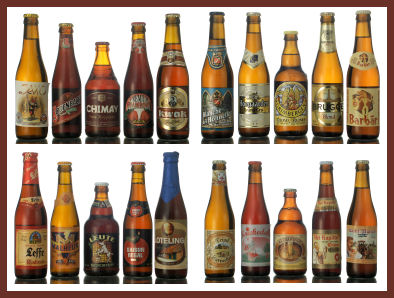
Belgian Beers: click
on this link for a list of 2230 Belgian Beers
The
Best Beer in the World: click on this
link to find out which beer won the competition.
Question:
Did Belgian waffles originate in Belgium?
:-)
Answer:
Naturally "Belgian waffles" originated in Belgium. But "waffles"? Not
sure.
According to an old Betty
Crocker cookbook, "a crusader wearing his armor accidentally sat in some
freshly baked oat cakes, flattening them and leaving deep imprints of the
steel links". And so it appears, one of the first waffles was created. Thank
goodness it's not as much trouble to make golden, crisp waffles today.
The modern waffle has its
origins in the late middle ages. Waffle irons consisted of two metal plates
connected by a hinge, each plate was connected to a wooden arm. Some plates
had imprinted designs such as a coat-of-arms or landscape, while some had the
no-familiar honeycomb/gridiron pattern. The iron was placed over a fire and
would need to be flipped manually to cook both sides of the waffle. These
irons were used to produce a variety of different flat, unleavened cakes
(usually from a mixture of barley and oats, not the white flour of today).
Some were rolled into a horn or tube, others were left flat. In many cities
waffles were sold off carts by street vendors. Judging from extant
illustrations, these vendors gave people their money's worth, as the waffles
in question were about the size of a small pizza."
Although
no one seems sure that the waffle actually "originated" in Belgium, most
agree that that's where they got to be the most popular and it was in 1964
at the World's Fair in New York City that waffles were seriously introduced
to the USA by the Belgians.

AND, WHAT'S MORE,
"FRENCH FRIES" DID ORIGINATE IN BELGIUM!

Belgian
historian Jo Gerard recounts that potatoes were already fried in
1680 in the
Spanish Netherlands,
in the area of "the
Meuse
valley between
Dinant
and
Liège,
Belgium. The poor inhabitants of this region had the custom of
accompanying their meals with small fried
fish, but
when the
river was
frozen and they were unable to fish, they cut potatoes
lengthwise and fried them in
oil to
accompany their meals."
The
Dutch
concur with a
Southern Netherlandish
or Belgian origin when referring to Vlaamse fritten ('Flemish
fries'). In 1857, the
newspaper
Courrier de Verviers devotes an article to Fritz (assumed
pun with 'frites'), a Belgian
entrepreneur
selling French fries at fairs, calling them "le roi des
pommes de terre frites". In 1862, a stall selling French
fried potatoes (frietkot)
called "Max en Fritz" was established near
Het Steen
in Antwerp.
A Belgian legend claims that the term
"French" was introduced when
British
or
American
soldiers arrived in Belgium during
World War I,
and consequently tasted Belgian fries. They supposedly called
them "French", as it was the official language of the
Belgian Army
at that time.
"Frites" became the national Belgian
snack and
a substantial part of their national dishes — making the
Belgians their largest per capita consumers in
Europe,
and their "symbolic" creators.
UPDATED
09/02/2010